

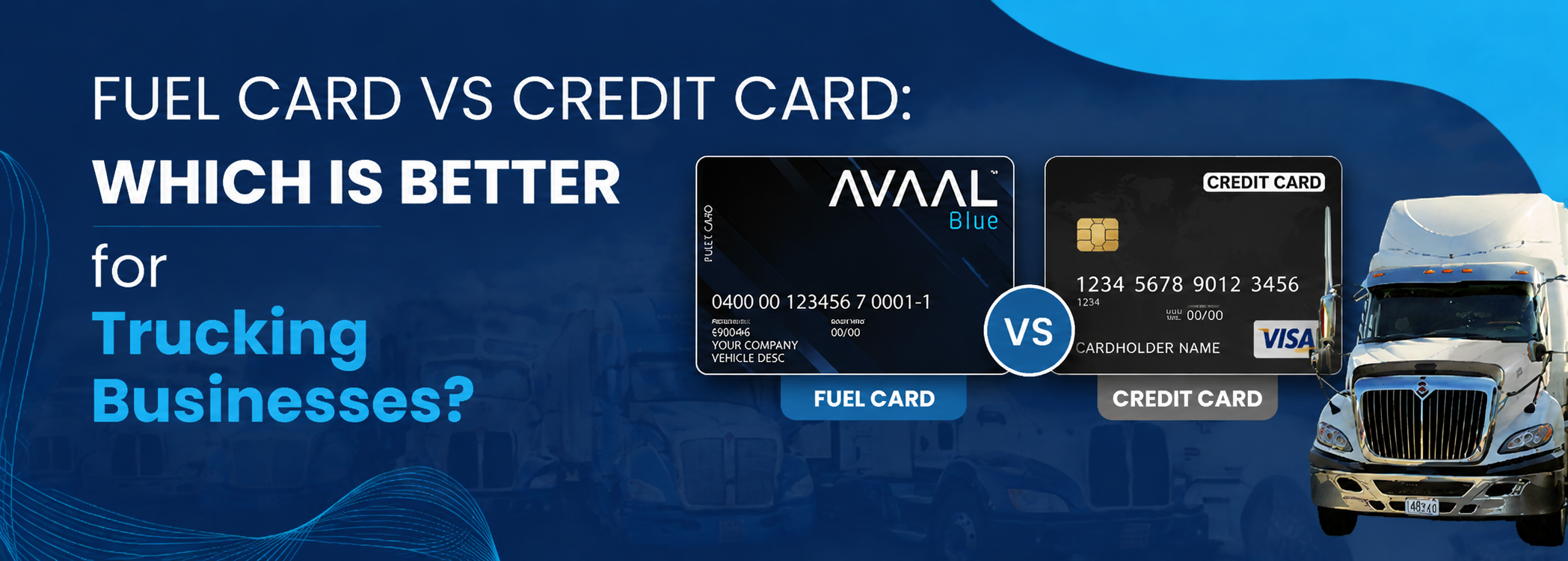
Fuel Card vs Credit Card: Which Is Better for Trucking Businesses?
A fuel card is designed specifically for trucking companies and commercial fleets, offering fuel savings, purchase controls, detailed fuel reports, and expense management tools. A traditional credit card provides general purchasing flexibility but typically lacks the specialized features needed to manage fuel expenses, monitor drivers, and optimize fleet spending.
For trucking businesses that spend thousands of dollars on fuel every month, a fuel card can provide better cost control, visibility, and operational efficiency compared with a standard business credit card.
What Is a Fuel Card?
A fuel card is a payment card created specifically for businesses that purchase fuel regularly. Trucking companies use fuel cards to pay for diesel, gasoline, and other fleet-related expenses while gaining access to tools that help manage fuel costs.
Unlike regular credit cards, fuel cards provide fleet managers with visibility into:
- Fuel purchases by driver
- Vehicle fuel consumption
- Purchase locations
- Fuel volume
- Spending patterns
- Potential misuse or fraud
For trucking companies, where fuel is one of the largest operating expenses, this information can significantly improve cost management and profitability.
What Is a Credit Card?
A business credit card is a general payment method that allows companies to make purchases and pay later. While credit cards can be useful for everyday business expenses, they are not designed specifically for transportation operations.
A trucking company may use a credit card for:
- Office expenses
- Repairs and maintenance
- Travel costs
- Equipment purchases
- General business spending
However, credit cards usually do not provide the detailed fuel tracking, driver controls, and fleet management features required by transportation businesses.
Fuel Card vs Credit Card: Key Differences at a Glance
| Feature | Fleet Fuel Card | Traditional Credit Card |
| Designed for trucking fleets | ✅ Yes | ❌ No |
| Fuel savings and discounts | ✅ Often available | ❌ Usually unavailable |
| Fuel purchase controls | ✅ Yes | Limited |
| Driver spending limits | ✅ Yes | Limited |
| Fuel transaction reporting | ✅ Detailed reports | Basic statements |
| Fleet expense management | ✅ Built-in tools | Manual tracking |
| Acceptance at fuel locations | Fuel network dependent | Wider acceptance |
| Helps prevent fuel fraud | ✅ Advanced controls | Limited |
Fuel Cards Can Reduce Fuel Expenses Through Savings and Better Control
Fuel is one of the biggest operating costs for trucking companies. A fleet fuel card can help reduce expenses through:
1. Fuel Savings
Many fuel card programs offer discounted fuel pricing through their network of fuel stations. For fleets purchasing large volumes of diesel, even small savings per gallon can add up significantly over time.
2. Better Fuel Expense Tracking
With a traditional credit card, fleet managers often need to manually review receipts and statements.
Fuel cards provide organized fuel reports that show:
- Who purchased fuel
- Which truck was fueled
- How much fuel was purchased
- When and where the transaction occurred
This makes accounting, budgeting, and expense reporting easier.
3. Reduced Fuel Fraud
Fuel card controls help prevent unauthorized spending by allowing businesses to set:
- Driver-specific limits
- Vehicle-specific restrictions
- Purchase amount limits
- Fuel type restrictions
These features are especially valuable for companies managing multiple trucks and drivers.
Why Trucking Companies Prefer Fuel Cards Over Credit Cards
1. Fuel Cards Are Built for Fleet Operations
A regular credit card treats fuel as just another expense category.
A fuel card treats fuel as a critical operating cost that requires monitoring, reporting, and optimization.
2. Easier Driver Expense Management
Managing fuel receipts from multiple drivers can become time-consuming.
Fuel cards allow fleet managers to track purchases digitally without relying on paper receipts or manual reconciliation.
3. Improved Fleet Visibility
Fuel data can help identify:
- Vehicles using excessive fuel
- Unusual purchasing activity
- Inefficient driving habits
- Increasing fuel costs
These insights help businesses make smarter operational decisions.
4. Better Budget Control
Fuel cards allow trucking companies to create spending rules and monitor fuel expenses more effectively. This helps prevent unexpected costs and improves financial planning.
Are Fuel Cards Worth It for Small Trucking Companies?
Yes. Fuel cards can benefit small trucking companies and owner-operators, not only large fleets.
Small fleets can use fuel cards to:
- Reduce fuel expenses
- Simplify accounting
- Track operating costs
- Manage driver purchases
- Improve cash flow management
Even companies with a few trucks can benefit from improved fuel visibility and spending control.
When Should a Trucking Company Choose a Credit Card Instead?
A credit card may be a better option when:
- Fuel purchases are limited
- The business does not operate vehicles regularly
- General business expenses are the priority
- Fleet-level tracking is not required
However, for companies where fuel is a major operating expense, a dedicated fuel card is usually the more practical solution.
AVAAL Blue: Fuel Card Benefits
One common concern with fuel cards is whether drivers can easily find accepting fuel locations.
AVAAL Blue solves that challenge with two cards built for how fleets actually fuel. The AVAAL Blue card gives heavy trucks access to a network of more than 18,000 truck stops, while AVAAL Blue+ includes everything in Blue plus acceptance at over 95% of U.S. gas stations — ideal for mixed fleets running vans, box trucks, and other commercial vehicles. Both cards offer the same grade of security and the same simple application process, with coverage across Canada and the U.S. Fleets save an average of 60¢ per gallon — up to $18,760 per truck, per year.
With AVAAL Blue and Blue+, trucking companies benefit from:
- Wide acceptance: 18,000+ truck stops (Blue) and 95% of U.S. gas stations (Blue+)
- Better fuel expense tracking
- Driver purchase controls
- Simplified fuel management
- Improved fleet visibility
For carriers, owner-operators, and fleet managers looking for a smarter way to manage fuel costs, AVAAL Blue provides the flexibility of broad acceptance with the control of a dedicated fleet fuel solution.
The Verdict: Which Card Is Better for Trucking Businesses?
While credit cards provide flexibility for general business purchases, fuel cards are specifically designed to solve the challenges trucking companies face.
A fuel card can help businesses:
- Lower fuel costs
- Track driver spending
- Improve expense reporting
- Reduce fuel fraud
- Manage fleet operations more efficiently
For carriers, owner-operators, and fleet managers who rely on fuel as a major business expense, a specialized fuel card solution provides advantages that a traditional credit card cannot match.
Frequently Asked Questions (FAQs)
1. What is the difference between a fuel card and a credit card?
A fuel card is designed specifically for fuel purchases and fleet management, while a credit card is a general payment method used for many types of business expenses.
2. Do fuel cards save trucking companies money?
Yes. Fuel cards can help trucking companies save money through fuel discounts, spending controls, and improved expense tracking.
3. Can owner-operators use fuel cards?
Yes. Owner-operators can use fuel cards to manage fuel expenses, track purchases, and improve profitability.
4. Are fuel cards better than credit cards for trucking companies?
For businesses where fuel is a major expense, fuel cards are usually the better choice because they provide specialized fleet management features that credit cards do not offer.
5. Can fuel cards prevent driver fuel fraud?
Fuel cards can reduce fuel fraud by providing purchase controls, transaction monitoring, and detailed fuel reports.